Posts tagged "games":
Links #82
- One Night Wild - In Deutschland gibt es viel mehr Orte, an denen du völlig legal unter freiem Himmel schlafen kannst, als du vielleicht denkst (In Germany there are much more places where you can legally sleep under the open sky than you perhaps thing)
- A Couple Million Lines of Haskell: Production Engineering at Mercury - The editors of the Haskell Blog are happy to announce a new series of articles called "Haskellers from the trenches", where we invite experienced engineers to talk about their subjects of expertise, best practices, and production tales.
- Formally Specifying Dungeons and Dragons rulebooks
- Programming Fonts
Links #80
- Smalltalk’s Browser: Unbeatable, Yet Not Enough
- How to Compute With Data You Can’t See
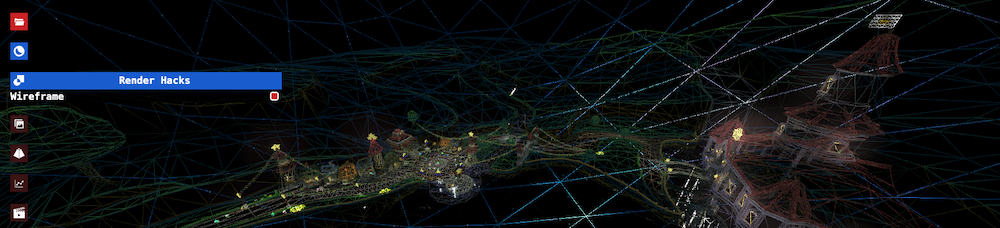
- noclip.website A digital museum of video game levels
-
I've been maintaining Emacs Solo for a while now, and I think it's time to talk about what happened in this latest cycle as the project reaches its two-year mark.
For those who haven't seen it before, Emacs Solo is my daily-driver Emacs configuration with one strict rule: no external packages. Everything is either built into Emacs or written from scratch by me in the lisp/ directory
I don't think I'd renounce to the comfort of some external packages (Magit and Slime, for example), but I appreciate the exercise, and I see the benefit it could bring, such as only relying on code that went through the quality standards of the official release.
Links #69
- Multiplayer Board Game with Clojure and HTMX
- Escape the walled garden and algorithm black boxes with RSS feeds
- Thoughts after 10 years
- Classifying data for developers in a hurry using LLMs
- On writing #1
Links #67
- Minimal Emacs The minimal-emacs.d project is a customizable Emacs base that provides better Emacs defaults and optimized startup, intended to serve as a solid foundation for a vanilla Emacs configuration.
- 6502 THE SPREADSHEET A spreadsheet that generates the code for 6502 chip emulator functions in a variety of programming languages.
- Shooter Game Lessons Turning a Fun Project into Lessons: Programming a Space Shooter in Squeak/Smalltalk
Links #34
- Scicloj meeting #19: Alan Dipert: Common Lisp for the Curious Clojurian
-
In this series of blog posts I'd like to go through some of the well known design patterns and make a comparison between the implementation in Scala and Common Lisp. Scala is a statically typed, multi-paradigm language running on the Java Virtual Machine. Common Lisp is a dynamically typed, multi-paradigm language running natively on many platforms.
- xeus-sql: a Jupyter kernel for general SQL implementations
- The History(s) of Video Games: "a list of games chronologically sorted in the year they take place in." (via ariis)
- Python Design Patterns
- Uncovering a 24-year-old bug in the Linux Kernel
Links #33
- Fast-Paced Multiplayer (Part I): Client-Server Game Architecture
- Emacs, org-mode and 100 books in a year
- mu4e Tutorials
- Racket School 2019: The “How to Design Languages” Track
Links #8
- Seeking the Productive Life: Some Details of My Personal Infrastructure
- Smooth Video Game Emulation in Emacs
- "searching for airline tickets is an EXPSPACE-hard problem"
Links #7
- Life Off the Grid, Part 2: Playing Ultima Underworld
- Best of 2018 in Tech Talks
- Any tips for configuring Emacs for Python development on Ubuntu? (Reddit)
- Mathematical Art Galleries - 2019 Joint Mathematics Meetings
Links #5
- Kílta: "This is a personal language. By this I mean it is a step or two away from a heartlang. It is designed to express my own interests best, and few other considerations, apart from my own sense of linguisticesthetics, are in play here"
- Life Off the Grid, Part 1: Making Ultima Underworld
- About watercolor toxicity
Links #4
- The MAESTRO Dataset and Wave2Midi2Wave
- ISO 3013 is a standard published by the International Organization for Standardization (commonly referred to as ISO), specifying a standardized method for brewing tea
- Introducing Darkstar: A Xerox Star Emulator
- Grid Edges: "Games with grids usually use the tiles but there are also cool things to do with edges and vertices. For construction games the edges can be useful for blocking connections between tiles (walls, chasms, windows) and allowing connections between tiles (doors, pipes, wires)."